





Summary of
PseudoSkeptic Fallacies
(Click below for examples)
- Characteristics and Behaviors
- New! Hijacking Skepticism to mean its opposite
- Selective Skepticism / Establishment Defenders
- Perpetual Denial of Evidence
- Double Standards, Contradictions and Lies
- Dismissing Anecdotal Evidence as Invalid
- Overgeneralizations and Distortions
- Cherry Picking of Evidence
- Straw Man Arguments
- Forcing Explanations That Don't Fit The Data
- Invisible Pink Unicorn / Santa Claus Gambit
- Occam's Razor
- Extraordinary Claims Require Extraordinary Evidence
- Fallacies of UFO Debunkers


Wikipedia's original entry on pathological skepticism (before pseudoskeptics took it down) listed these defining traits of pseudoskeptics:
"The difference between pseudoskepticism and skepticism appear in the conduct of an individual's actions. Among the indications of pseudoskeptical actions are:
- Resorting to various logical fallacies (usually in an attack against those disputing a theory).
- The assumption of facts (such as, stating theories determine phenomena).
- The obfuscation of facts.
- The use of attractive or neutral euphemisms to disguise unpleasant facts concerning their own positions.
- Insisting that fundamental framework and theory of science hardly change.
- Unwavering belief that science is a consensus and run on majority rule.
- Maintaining a stance of hostility and intolerance.
- Instituting hurdles against new theories by "moving the goalposts".
- Ignoring intellectual suppression of unorthodox theories.
- Judging a theory or phenomena without investigation and insisting on ignoring the details thereafter."
In the SCEPCOP forum, Steve Trueblue listed these five consistent patterns in pseudoskeptics:
"As a skilled observer you will also note that Pseudoskeptics:
- Seldom, in fact almost never, ask questions, reflecting Zero Curiosity thus learning difficulties
- Practice a very high level of self deception and mistakenly believe they can lie to adults as they did in childhood
- Display markedly deficient reading and comprehension skills
- Display inability to connect thoughts sequentially and plan an argument- often defeating their own case
- Depend on bluster and bullying and name calling to make up for lack of argument content"
According to WikiSynergy:
- Pseudoskepticism (or pseudo-skepticism) is defined as thinking that claims to be Skeptical but is actually faith-based disbelief. Because real skepticism is a justifiable position, pseudoskepticism may also be defined as making pseudoscientific arguments in pursuit of a skeptical agenda.
- Pseudoskepticism is a general term which encompasses two types of faith-based disbelief: making positive claims that something is wrong or unreal without evidence (positive disbelief), and rejecting sufficient evidence.
This insightful YouTuber hit the bull's eye about pseudoskeptics:
- "What skeptics fail to understand is that skepticism involves being skeptical of your own position, it does not mean just being skeptical of that which you do not believe in, otherwise we are all skeptics and that renders their use of the term "skeptic" meaningless. A true skeptic casts skepticism on their own position as well. Since the Randi crowd do not employ skepticism in this respect then they are fairly termed pseudo skeptics and demean the term skepticism."
Similarly:
- "The original definition of skeptic was a person who questions ALL beliefs, facts, and points-of-view. A healthy perspective in my opinion. Today's common definition of skeptic is someone who questions any belief that strays outside of the status quo, yet leaving the status quo itself completely unquestioned. Kind of a juvenile and intellectually lazy practice in my opinion."
Likewise:
- "I've never trusted skeptics, for the very reason that they are willing to accept the official version of things without a shred of proof but require unrealistic amounts of evidence to accept any other possibility."
Even Wikipedia indirectly admits that modern skepticism is really about rejecting new information rather than true inquiry:
- "The word skepticism can characterize a position on a single claim, but in scholastic circles more frequently describes a lasting mind-set and an approach to accepting or rejecting new information."
They claim that their behavior is "skepticism" but in reality they know nothing about the true meaning of skepticism nor practice it since they apply no skepticism to their own beliefs or to the status quo but in fact have a total blind spot to them. Pyrrho, the founder of "Skepticism", intended for it to be about open inquiry and suspension of judgment.
- "In classical philosophy, skepticism refers to the teachings and the traits of the 'Skeptikoi', a school of philosophers of whom it was said that they 'asserted nothing but only opined.' (Liddell and Scott) In this sense, philosophical skepticism, or Pyrrhonism, is the philosophical position that one should suspend judgment in investigations.[1]"
And according to Webster's Revised Unabridged Dictionary, a skeptic is:
"One who is yet undecided as to what is true; one who is looking or inquiring for what is true; an inquirer after facts or reasons."
But rather than inquiring, or asking questions to try to understand something, they seek to debunk, discredit and ridicule anything that doesn't fit into their belief system. And rather than suspending judgment, they make accusations of fraud and delusion of all paranormal claimants. They are PROSECUTORS, not investigators. Hence, we call them pseudoskeptics (a term coined by the late Marcello Truzzi) for their actions and behaviors are the complete antithesis of what skepticism truly means.
Regardless of the facts and evidence, they always START and END with the following dogmatic positions:
- Paranormal claims are all bunk and cannot be true. There is no evidence for them.
- Conspiracies are all false. There is no evidence for them. Official sources are not to be questioned.
- Anything that challenges the status quo and materialism is wrong and must be debunked.
- Only mundane materialistic explanations are acceptable. Paranormal ones are not.
They always begin and end with those fixed unchanging beliefs, regardless of the facts or evidence in any investigation or debate. EVERYTIME. That's one consistent thing you will notice about them. And they will resort to playing games, ridicule, denial, even deliberate distortion to maintain these core positions. That's why they are not really capable of serious honest discussion. It doesn't matter how much proof or evidence you have. They will never admit that they've lost, even if technically they have. When cornered by facts and reason, they resort to denial or ad hominem attacks. Or they even will spin your own arguments against you, without basis. It's like winning a chess game against an opponent, and even though the rules say they are checkmated, they still refuse to admit defeat. That's not fair, honest, or decent behavior.
Dean Radin, concluded the same in his acclaimed book Entangled Minds: (pages 10-11)
- "Some skeptics pushed doubt to extremes and insisted that positive evidence was always due to mistakes or intentional fraud. As I saw it, within this dialectic one side was struggling to understand the depths of inner space by probing Nature with clever questions. The other was trying to maintain the status quo through passionate, and sometimes vicious, denial. The former were willing to take risks to advance knowledge, the latter were naysayers interested mainly in defending dogma."
Chris Carter, author of Parapsychology and the Skeptics, accurately described the pseudoskeptics' true motivations in this interview:
- "You have to remember that the argument is not really about the evidence. The argument is about their assumptions and their preconceptions. Their preconceptions are, with these sort of phenomena, that they don’t make any sense and challenge their world view. So, they’re going to do anything they possibly can to dismiss evidence that challenges their preconceptions."
Pseudoskeptics have hijacked the term "skeptic" to refer to the one who suppresses, rather than the one who "doubts or questions" which it is supposed to refer to. As such, a "skeptic" now refers to the ridiculer, debunker and discreditor of the "questioner" (who is the true skeptic) rather than to the questioner himself. By doing so, they've pretended to be the opposite of what they are to hide their true agenda of suppression of new ideas. See here for more info.
Additionally, they've hijacked terms such as "rational, reason, logic, critical thinking" to mean the "proper" thinking and behavior that supports materialism and orthodoxy, and rejects against anything that challenges it. That is not what those words mean of course. It's a form of mind control and disinformation.
This seems way too calculated and militant to be due to some accidental misunderstanding, ignorance or closed mindedness. Hijacking a word to mean its opposite is more indicative of a deliberate agenda, such as a disinformation campaign or form of mind control. If that sounds terrible, well, we are here to expose it thank goodness.
In addition, despite their worship of science, they do not even follow the Scientific Method, because they do not update their hypotheses to fit the data, but instead reject data that doesn't fit into their hypothesis, which is a direct violation of the Scientific Method itself. There are plenty of examples of this.
Furthermore, oddly enough, they treat Science as if it were some kind of authoritarian "entity" that takes positions and views on issues (their own of course), when it is in fact merely a tool and method of inquiry based on logical principles. In reality, science does not take positions or hold dogmatic beliefs on paranormal or conspiratorial subjects. People take positions, not Science, which holds no more views than my computer does. Science is not a living entity. These pseudoskeptics are projecting their own views and Atheistic philosophy into Science, which they hold as the ultimate authority, aka Scientism. (Oh well, I guess pseudoskeptics need something to worship too)
It would also seem that pseudoskeptics hate mysteries and unexplained phenomena, and are uncomfortable with them. Thus they are emotional and bigoted toward it, not objective, open or logical. As to what motivates these pseudoskeptics, David Leiter, who spent time undercover in a skeptic organization, gives his take on that in this article:
- "A person who has been duped frequently in everyday life might learn by bitter experience to be cautious and wary. The reaction of those who have joined PhACT is however more dysfunctional. They have been wounded at a deeper level, to the extent that what was purported to be a valid philosophy of life, and in which they were heavily involved, turns out to be empty and useless, even damaging, in their eyes. Thus, they gravitate to what appears to them to be the ultimate non-faith-based philosophy, Science. Unfortunately, while they loudly proclaim their righteousness, based on their professed adherence to “hard science”, they do so with the one thing no true scientist can afford to possess, a closed mind. Instead of becoming scientifically minded, they become adherents of scientism, the belief system in which science and only science has all the answers to everything.
- This regrettable condition acts to preclude their unbiased consideration of phenomena on the cutting edge of science, which is not how a true scientist should behave. In fact, many “Skeptics” will not even read significantly into the literature on the subjects about which they are most skeptical. I have direct experience with this specific behavior on the part of a number of PhACT members. Initially, I attributed that behavior to just plain laziness, but lately I’ve begun to suspect that those individuals may actually have a phobia about reading material that is contrary to their own views. It seems entirely possible that they fear “contamination” from that exposure will eventually lead to (Gasp!) acceptance of the opposition’s position. Such scientifically inclined, but psychologically scarred people tend to join Skeptics’ organizations much as one might join any other support group, say, Alcoholics Anonymous. There they find comfort, consolation, and support amongst their own kind.
- Anyone who has spent much time engaging members of Skeptics’ organizations knows about their strong inclination toward ridicule and ad hominem criticism of those with differing viewpoints. Therefore, it should come as no surprise that many members of PhACT have been rather offended by my position as someone who is skeptical of Skeptics. As the old adage states, “They can dish it out, but they can’t take it.”
In school, you are taught that "critical thinking" means to refute and ridicule anything that opposes the establishment or status quo, but never the status quo itself. A true skeptic can rise above that and apply skepticism and critical thought toward established orthodoxy, but a pseudo-skeptic cannot. Instead, the pseudo-skeptic follows the school system's form of "critical thinking", applying it only to those who oppose orthodoxy in defense of the status quo.
In that sense, they are in reality "establishment defenders" rather than true skeptics. That is why they NEVER challenge, criticize or scrutinize their government or any part of the establishment, including the pharmaceutical companies, CIA or FBI, even if logic, facts, evidence or moral cause dictates that they should.
To these establishment defenders, Authority = Truth, and as such is always blameless in their eyes. That is their religion, so hence, all their skills, talents and knowledge is used to serve their true God - orthodoxy establishment. In their view, establishment authority can do no wrong, even if they murder, traffick drugs, steal, lie, stage terrorist attacks, start wars by funding both sides, etc.
What this means is that these pseudo-skeptics or establishment defenders, which are commonly featured in the mainstream media, do not serve truth as their master. As such, they cannot always do what's right, but in fact, are willing to lie and deceive to serve their establishment masters (there are so many documented cases of this). Thus they are not "free" in any sense of the word, nor honest, which is sad.
This is why not only are they closed minded against anything to do with paranormal phenomena, but are vehemently opposed to all claims of government conspiracies as well, no matter how well supported, for it offends their "true master" (which is not truth).
Examples of famous pseudo-skeptics and establishment defenders: (Check them all out and you will see that their actions fit the above criteria)
- James Randi and his JREF crowd
- Michael Shermer
- CSICOP and their crowd
- Penn and Teller and their "Bullshit" show (pun intended) which is an insult to one's intelligence
- The Mythbusters
- Phil Plait and his "Bad Astronomy" folks
Finally, here is an example and epitome of a true skeptic. Darryl Sloan, author of Reality Check, emphasizes right from the introduction of his book that to be liberated and free, one must question everything and never hold beliefs that are resistant to change. That is the hallmark of true skepticism, which is rare and not encouraged by any belief system (including Scientism), as they are designed to resist change. Listen to Sloan explain it himself below in his reading of his book intro, and notice that none of the Randis or Shermers, who rail about "Science" and hold fixed belief systems, ever encourage you to think for yourself the way Sloan does. Instead, they preach that one should adopt the views of orthodoxy on every subject, as explained above. Notice how refreshing Sloan is in comparison to that.


Support SCEPCOP
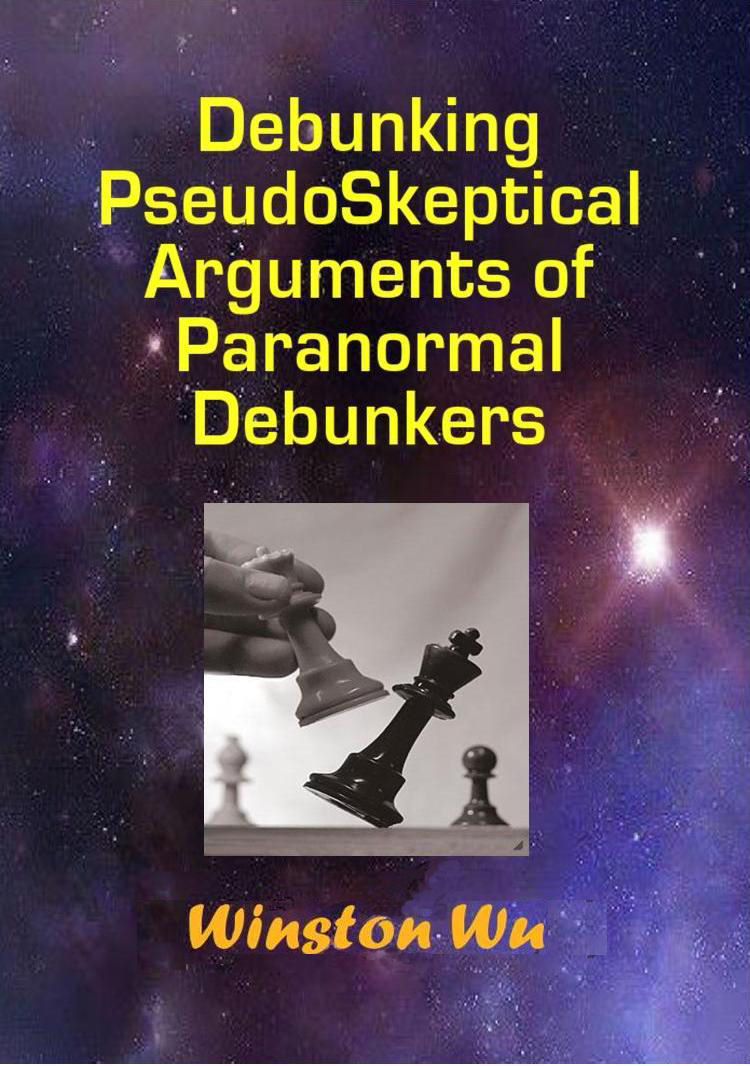
Order Debunking PseudoSkeptics or Debunking Christians on Amazon


"The most productive mindset you can have is simply this: always, always, always have a belief system that doesn’t resist change. Go wherever the information leads you, without fear, because surely the truth is never something to dread." - Darryl Sloan, author of Reality Check
Characteristics of PseudoSkeptics vs. True Skeptics: Comparison Chart
All pseudoskeptics will claim to be true skeptics. But regardless of how they define themselves, a pseudoskeptic is a pseudoskeptic if their characteristics and behaviors fit the traits of one. So it doesn't matter what they call themselves, because actions speak louder than words. Here is a comparison chart of the differences between the traits of a true skeptic vs. a pseudoskeptic:
True Skeptics / Open-Minded Skeptics
- Questions everything and takes nothing on faith, even from cherished established institutions.
- Asks questions to try to understand new things and are open to learning about them.
- Applies critical examination and inquiry to all sides, including their own.
- Withholds judgment and does not jump to rash conclusions.
- Seeks the truth and considers it the highest aim.
- Thinks in terms of possibilities rather than in preserving fixed views.
- Fairly and objectively weighs evidence on all sides.
- Acknowledges valid convincing evidence rather than ignoring or denying it.
- Possess solid sharp common sense and reason.
- Are able to adapt their paradigms to new evidence and update their hypothesis to fit the data.
- When all conventional explanations for a phenomenon are ruled out, are able to accept paranormal ones.
- Accepts that there are mysteries and revels in trying to understand them.
- Views science as a tool and methodology, not as a religion or authority to be obeyed. Understands the difference between the scientific process and the scientific establishment.
- Acknowledges that the scientific establishment is subject to politics, corruption, control, censorship and suppression, as all human based institutions are - and therefore must be critically examined and scrutinized, rather than taken on faith, especially in the light of contrary evidence to their claims.
- Will admit they are wrong when the evidence calls for it.
PseudoSkeptics / Closed-Minded Skeptics
- Does not question anything from established non-religious institutions, but takes whatever they say on faith and demands that others do the same.
- Does not ask questions to try to understand new things, but judges them by whether they fit into orthodoxy.
- Applies "critical thinking" only to that which opposes orthodoxy or materialism, but never to the status quo itself.
- Immediately judges as false and debunks anything that contradicts their paradigm.
- Are not interested in truth, evidence or facts, only in defending their views.
- Cannot think in terms of possibilities, but sees their paradigms as fixed and constant.
- Are willing to lie and deceive to discredit their opponents.
- Automatically dismisses and denies all data that contradicts materialism and orthodoxy.
- Are judgmental and quick to draw conclusions about things they know little or nothing about.
- Scoffs and ridicules what they oppose instead of using objective analysis and examination.
- When faced with evidence or facts they can't refute, uses semantics, word games and denial to try to obfuscate the issue.
- Unable to adapt their paradigms to new evidence, and denies data which doesn't fit into them.
- When all conventional explanations for an unexplainable phenomenon are ruled out, are still not able to accept paranormal ones.
- Dislikes mystery and uncertainty, and insist that all unknown phenomena must have a mundane explanation.
- Views the scientific establishment as a religion and authority to be taken on faith and never questioned or challenged. Does not understand the difference between the scientific process/methodology and the scientific establishment institution.
- Assumes that the scientific establishment is objective and unbiased, and free of politics, corruption, control, censorship and suppression for no other reason than blind faith in authority.
- Will never admit that they are wrong no matter what, regardless of evidence.
